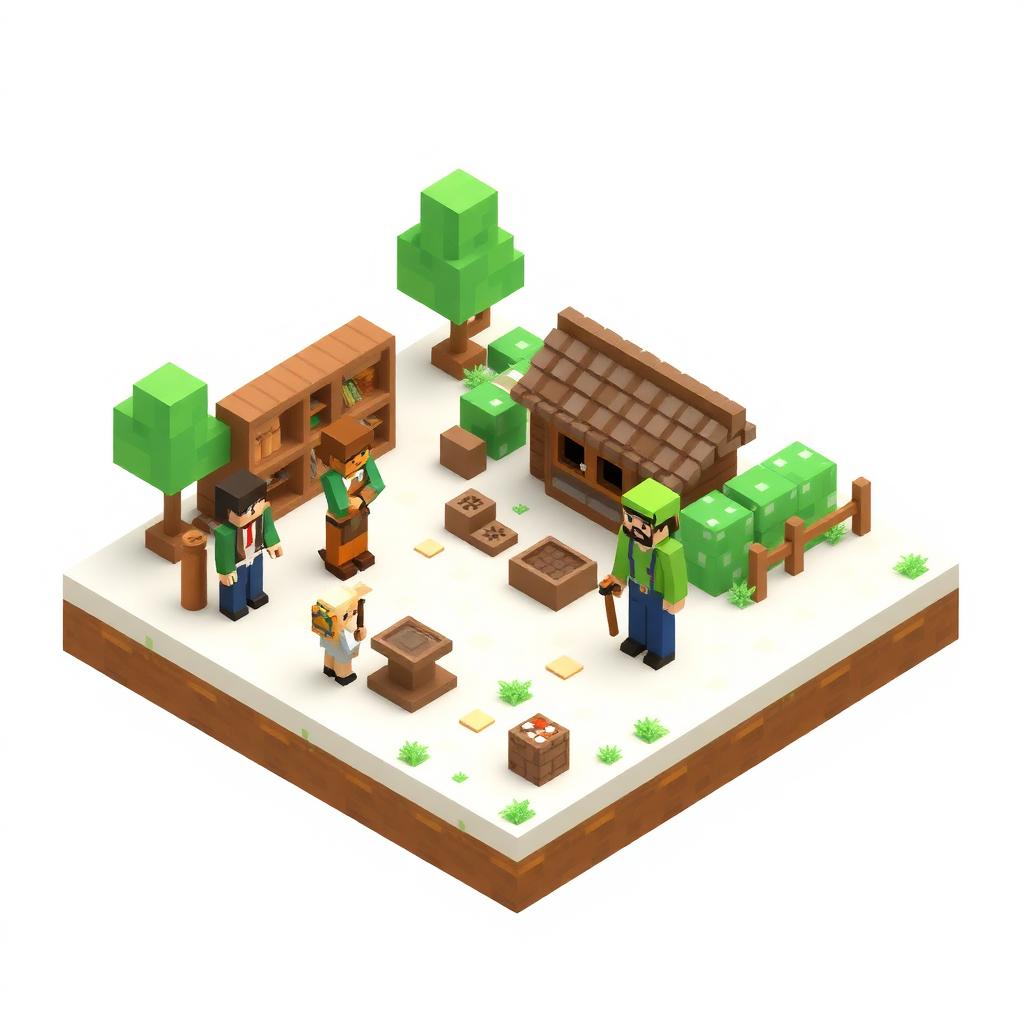
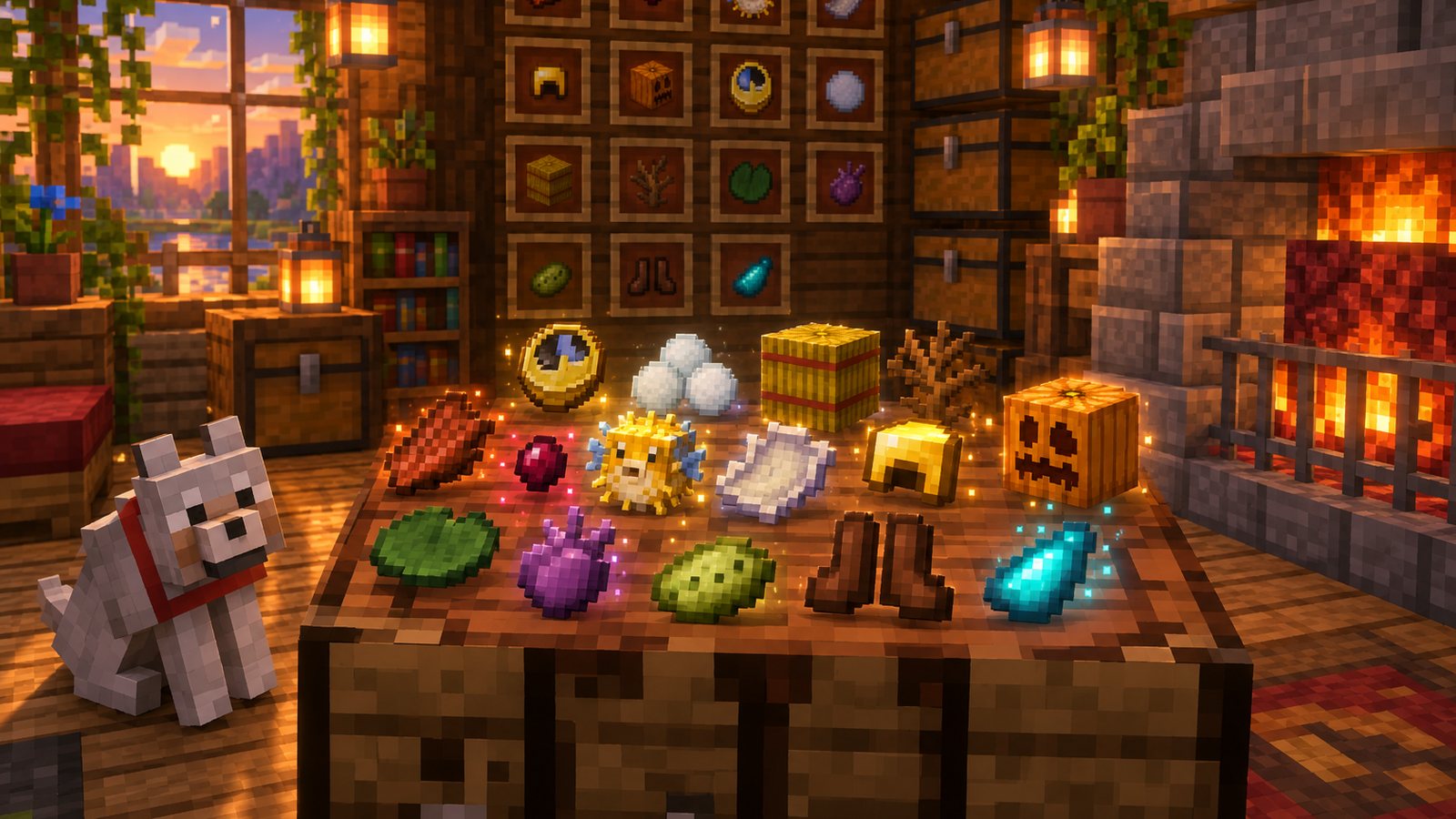
Every Minecraft player has a chest full of junk. Rotten flesh from zombies, spider eyes from night fights, stacks of diorite from caves and a golden helmet nobody wants to wear. Most players throw these items in lava or leave them to despawn. That is a mistake. Many of the items people call useless solve real survival problems once you know what they do.
This guide covers 20 overlooked items, why players think they are useless and the smartest way to use each one. Numbers and mechanics were checked against the Minecraft Wiki and follow current Java Edition and Bedrock Edition releases as of November 2026. Where a free MineBuildr tool helps, it is linked. For more hidden mechanics, read our list of 100 things you didn't know you could do in Minecraft.
Why some Minecraft items seem useless
Minecraft rarely explains what an item does. An item can look useless for three reasons: its obvious use is bad (rotten flesh is poor food), its real use is hidden in a system you have not unlocked yet (spider eyes only matter once you brew potions), or it solves a problem you have not met yet (leather boots only matter in powder snow). Once you reach villager trading, brewing and the Nether, most junk items become valuable.
- Mob drops often feed into brewing, trading or taming.
- Common blocks often double as fuel, light or trade goods.
- Weak gear often has a special effect that strong gear lacks.
Mob drops nobody wants (1 to 6)
1. Rotten flesh: feed your wolves and buy emeralds
Why players call it useless: eating rotten flesh restores 4 hunger but has an 80% chance to give you Hunger for 30 seconds, and it cannot go in a composter. Smart use: tamed wolves eat rotten flesh safely to heal, so your zombie loot becomes free dog food. Even better, a novice cleric villager buys 32 rotten flesh for 1 emerald. A zombie or mob farm can turn piles of flesh into a steady emerald income and level up clerics, who later sell Ender pearls, lapis lazuli and redstone. Plan the farm with the Mob Farm Planner and our mob farm guide.
2. Spider eye: cure zombie villagers for huge discounts
Why players call it useless: eating it poisons you, and it seems to have no recipe. Smart use: craft a spider eye with a brown mushroom and sugar to make a fermented spider eye. Add that to a water bottle in a brewing stand to brew a Potion of Weakness, then add gunpowder to make it a splash potion. Throw it at a zombie villager and use a normal golden apple on it. Once cured, a villager that had a job offers you permanent trade discounts, and villagers within 16 blocks give smaller ones. Curing the same villager again no longer adds more discounts since Java 1.20.2 and Bedrock 1.20.30. Check recipes with the Brewing Calculator, our potion recipes chart and the Villager Trade Optimizer.
3. Pufferfish: breathe underwater
Why players call it useless: eating a pufferfish gives Poison, Nausea and Hunger at the same time. Smart use: add a pufferfish to an Awkward Potion to brew a Potion of Water Breathing, which lasts 3 minutes, or 8 minutes with redstone. That makes ocean monuments, shipwrecks and underwater builds far easier. Pufferfish can also be fed safely to dolphins and wolves, and in current versions they are used to tame nautiluses. Keep a few in a chest instead of throwing them back.
4. Phantom membrane: repair your elytra
Why players call it useless: phantoms are annoying, and most players do not have an elytra when they first collect membranes. Smart use: in an anvil, each phantom membrane restores 108 durability to an elytra, which is 25% of its total. Four membranes fully repair it. Membranes also brew Potions of Slow Falling, which are perfect for building tall structures, exploring End cities and surviving long drops. Plan long flights with the Premium Elytra Flight Calculator and keep anvil costs low with the Anvil Cost Optimizer.
5. Rabbit hide: turn it into leather
Why players call it useless: it looks like a tiny, weaker piece of leather with no recipes of its own. Smart use: four rabbit hides craft one leather. Leather makes books for enchanting bookshelves, item frames for map walls and storage labels, and bundles, which need just one leather and one string. Bundles let one inventory slot hold a mix of small item stacks. Pack them efficiently with the Bundle Planner.
6. Ink sac and glow ink sac: readable signs at night
Why players call them useless: once you have black dye from wither roses or other sources, squid drops seem pointless. Smart use: use a glow ink sac on a sign or hanging sign to make the text brighter and outlined, so storage labels and shop signs stay readable in dark rooms. The text does not give off light. A normal ink sac turns glowing text back to normal. Ink sacs are also part of the book and quill recipe, with a book and a feather, which you can draft with the Book and Quill Generator.
Overlooked blocks with hidden jobs (7 to 12)
7. Dead bush: emergency sticks and fuel
Why players call it useless: it is literally dead, and Mojang says it cannot be composted because it is too dead. Smart use: breaking a dead bush without shears drops 0 to 2 sticks, which is handy in deserts and badlands where trees are rare. A dead bush also works as furnace fuel and smelts half an item. Collected with shears, it makes a great decoration in flower pots for desert, western and abandoned builds.
8. Dried kelp block: one of the best furnace fuels
Why players call it useless: dried kelp is weak food that restores only 1 hunger. Smart use: craft nine dried kelp into a dried kelp block, which smelts 20 items in a furnace. That is 2.5 times longer than coal. Dry the kelp on a campfire, which cooks without fuel, and a kelp farm becomes renewable fuel for your whole base. Dried kelp blocks also have a 50% chance to raise a composter level. Scale it up with the Premium Super Smelter Optimizer and check output with the Farm Efficiency Calculator.
9. Hay bale: a fall damage pillow
Why players call it useless: it seems like just a way to store wheat. Smart use: landing on a hay bale reduces fall damage by 80%. Place one at the bottom of a mine shaft, a drop elevator or an elytra landing spot. Put a hay bale under a campfire to make a signal fire whose smoke rises 24 blocks, a great landmark to find your base. Hay bales also feed horses and llamas. For more surprising builds, see 20 Minecraft builds that look impossible.
10. Netherrack: an eternal fireplace
Why players call it useless: there is so much of it in the Nether, and it breaks almost instantly. Smart use: fire lit on top of netherrack burns forever and is not put out by rain. Build a fireplace with netherrack at the base, surrounded by stone, brick or deepslate so the fire cannot spread to wood, wool or leaves. It also makes eternal braziers, beacon fires on towers and dramatic Nether-themed builds. Plan cozy rooms with the Interior Designer.
11. Glow lichen: subtle light that stops mob spawns
Why players call it useless: it looks like cave decoration, and torches seem brighter and easier. Smart use: glow lichen gives light level 7 and can sit on any side of a block, including walls and ceilings. In Java Edition, most hostile mobs in the Overworld need a block light level of 0 to spawn, so glow lichen lights up caves and natural builds without the look of torches. Collect it with shears, and use bone meal on it to spread it to nearby blocks.
12. Diorite: trade goods and crafting material
Why players call it useless: diorite is a long-running community joke, and you mine stacks of it in caves. Smart use: a Journeyman mason villager can buy 16 diorite, andesite or granite for an emerald. Diorite also crafts polished diorite, turns into andesite when combined with cobblestone and into granite when combined with Nether quartz. As a clean white block, it works as an accent next to darker stone. Test combinations with the Block Palette Designer and see mason trades in the Villager Career Tree.
Gear that seems pointless (13 to 17)
13. Golden armor: walk safely past piglins
Why players call it useless: a golden helmet has only 77 durability and the same armor points as iron. Smart use: piglins stay neutral toward any player wearing at least one piece of golden armor, so one golden helmet or pair of golden boots lets you explore bastions, barter and mine in the Nether far more safely. Opening chests or mining gold near piglins still angers them. Golden armor also has an enchantability of 25, the highest of normal armor, which improves your odds of strong enchantments. Read our Nether portal guide and test enchanting odds with the Enchanting Calculator.
14. Leather armor: walk on powder snow
Why players call it useless: it is the weakest armor in the game. Smart use: wearing any piece of leather armor prevents freezing in powder snow, and leather boots let you stand on powder snow without falling through. With leather boots you can even use powder snow like scaffolding: sneak to go down and jump to go up. That makes powder snow trap doors, hidden bases and mob traps possible, since mobs without leather boots sink in. Falling onto powder snow also negates all fall damage. Leather armor can be dyed and trimmed too, as our armor trims guide shows.
15. Carved pumpkin: look endermen in the eye
Why players call it useless: wearing it blocks much of your view. Smart use: while you wear a carved pumpkin, looking at endermen does not anger them, which makes the End and enderman-heavy areas safer. It also stops you from freezing creakings when you look at them, and it hides you on the locator bar for other players, which is useful for hide and seek or secret bases in multiplayer. Carved pumpkins are also the heads of snow golems and iron golems. Shear a pumpkin to carve it.
16. Clock: tell the time underground
Why players call it useless: on the surface you can just look at the sky. Smart use: a clock, crafted from 4 gold ingots and 1 redstone dust, shows the sun and moon position even when you are deep in a cave or inside a big base. Check it before heading up, so you do not walk out into a dark surface full of mobs. Placed in an item frame, it makes a working wall clock for builds. In the Nether and the End, the clock spins randomly because those dimensions have no day and night cycle.
17. Snowballs: free ranged attacks on blazes
Why players call them useless: snowballs deal no damage to most mobs. Smart use: each snowball deals 3 damage to blazes, so a stack of snowballs is a cheap, renewable weapon in Nether fortresses. Snowballs still knock mobs back, and they can destroy end crystals during the ender dragon fight. In current versions, snowballs also feed ghastlings to help them grow into happy ghasts, and happy ghasts follow players holding snowballs.
Odd items worth keeping (18 to 20)
18. Chorus fruit: an emergency escape
Why players call it useless: it teleports you randomly, which seems more risky than helpful. Smart use: chorus fruit can be eaten even when your hunger bar is full and teleports you to a random spot up to 8 blocks away on each axis, often through walls. That makes it a last-second escape when you are trapped, surrounded or stuck in a hole. It will not teleport you into water or lava. There is a 1 second cooldown between uses. Smelt it into popped chorus fruit to craft purpur blocks and end rods.
19. Lily pad: walk across water
Why players call it useless: it only seems to decorate swamps. Smart use: lily pads give you a solid surface on top of water, so you can make a cheap stepping-stone path across a river or pond without building a bridge. They also make swamp builds, ponds and frog habitats look natural. Boats break them, so keep them away from boat routes.
20. Poisonous potato: the one item that really is nearly useless
Why players call it useless: because it nearly is. Mojang says it cannot be composted because it is too poisonous, it cannot be planted and it has no crafting or brewing recipe. Smart use: it is still emergency food. A poisonous potato restores 2 hunger with a 60% chance of Poison for 5 seconds, and Poison in Minecraft stops at half a heart, so it cannot kill you by itself. Eat it only when you have nothing else and no mobs around. It was the star of the 2024 April Fools' snapshot, but that update never reached the real game.
Quick reference: useless items and their best use
- Rotten flesh: tamed wolf food, and 32 sells to a cleric for 1 emerald.
- Spider eye: fermented spider eye, then Weakness to cure zombie villagers.
- Pufferfish: Potion of Water Breathing.
- Phantom membrane: 108 elytra durability per membrane, and Slow Falling.
- Rabbit hide: 4 make 1 leather for books, item frames and bundles.
- Glow ink sac: glowing sign text.
- Dead bush: 0 to 2 sticks and half an item of fuel.
- Dried kelp block: 20 items of furnace fuel.
- Hay bale: 80% less fall damage and signal fires.
- Netherrack: fire that burns forever.
- Glow lichen: light level 7 on any surface.
- Diorite: 16 for an emerald from Journeyman masons.
- Golden armor: piglins stay neutral.
- Leather boots: walk on powder snow.
- Carved pumpkin: endermen stay calm.
- Clock: time of day underground.
- Snowball: 3 damage to blazes.
- Chorus fruit: emergency teleport up to 8 blocks.
- Lily pad: stepping stones on water.
- Poisonous potato: emergency food that cannot kill you.
Java vs Bedrock: what changes?
Almost all of these uses work in both editions. A few details differ.
- Villager trades are randomized differently. In Bedrock, a Journeyman mason only has a chance to offer the diorite trade, so you may need to reroll or try another mason.
- Mob spawning light rules differ. The glow lichen spawn tip is described for Java Edition. In Bedrock, light more of the area to be safe.
- Snowball knockback on players is a Bedrock feature. In Java, snowballs knock back mobs but not players.
- Brewing recipes, the hay bale fall damage reduction, golden armor with piglins and carved pumpkins with endermen work the same way in both.
How to stop wasting junk items
- Make a junk chest. Keep one labeled chest for mob drops and odd blocks instead of throwing them in lava.
- Unlock brewing early. A brewing stand turns spider eyes, pufferfish and phantom membranes into useful potions.
- Set up a trading hall. Clerics and masons buy rotten flesh and diorite. Plan one with the Premium Trading Hall Planner.
- Automate sorting. An item sorter or an automatic storage warehouse sends junk to the right chest automatically.
- Track goals. The Survival Progress Tracker reminds you which items you need for the next step.
Sources and further reading
- Minecraft Wiki, Rotten Flesh: https://minecraft.wiki/w/Rotten_Flesh
- Minecraft Wiki, Fermented Spider Eye: https://minecraft.wiki/w/Fermented_Spider_Eye
- Minecraft Wiki, Zombie Villager: https://minecraft.wiki/w/Zombie_Villager
- Minecraft Wiki, Pufferfish (item): https://minecraft.wiki/w/Pufferfish_(item)
- Minecraft Wiki, Phantom Membrane: https://minecraft.wiki/w/Phantom_Membrane
- Minecraft Wiki, Glow Ink Sac: https://minecraft.wiki/w/Glow_Ink_Sac
- Minecraft Wiki, Composter: https://minecraft.wiki/w/Composter
- Minecraft Wiki, Dead Bush: https://minecraft.wiki/w/Dead_Bush
- Minecraft Wiki, Dried Kelp Block: https://minecraft.wiki/w/Dried_Kelp_Block
- Minecraft Wiki, Hay Bale: https://minecraft.wiki/w/Hay_Bale
- Minecraft Wiki, Netherrack: https://minecraft.wiki/w/Netherrack
- Minecraft Wiki, Glow Lichen: https://minecraft.wiki/w/Glow_Lichen
- Minecraft Wiki, Mason: https://minecraft.wiki/w/Mason
- Minecraft Wiki, Piglin: https://minecraft.wiki/w/Piglin
- Minecraft Wiki, Armor: https://minecraft.wiki/w/Armor
- Minecraft Wiki, Powder Snow: https://minecraft.wiki/w/Powder_Snow
- Minecraft Wiki, Carved Pumpkin: https://minecraft.wiki/w/Carved_Pumpkin
- Minecraft Wiki, Clock: https://minecraft.wiki/w/Clock
- Minecraft Wiki, Snowball: https://minecraft.wiki/w/Snowball
- Minecraft Wiki, Chorus Fruit: https://minecraft.wiki/w/Chorus_Fruit
- Minecraft Wiki, Poisonous Potato: https://minecraft.wiki/w/Poisonous_Potato
- Minecraft Wiki, Poison: https://minecraft.wiki/w/Poison
Turn every item into progress with MineBuildr Premium
Knowing that junk has value is the first step. Turning it into emeralds, potions and fully repaired gear is where survival worlds really speed up. MineBuildr Premium gives you the planners that make that happen. Design a trading hall full of clerics and masons with the Trading Hall Planner, cut anvil repair costs with the Anvil Cost Optimizer, fuel giant smelting arrays with dried kelp using the Super Smelter Optimizer and plan elytra trips with the Elytra Flight Calculator.
- Every Premium planning tool in one membership, with new tools added over time.
- Premium blueprint downloads for castles, mansions and mega builds from the Blueprint Library.
- More daily AI Screenshot to Build generations to turn any inspiration picture into a plan.
- Exact counts and rates that save hours of guessing, mining and farming.
- Cancel any time from your account dashboard.
Start with the free tools, then upgrade when your junk chest is ready to become an emerald empire. Compare plans on the pricing page.
Give your next ambitious build a better workflow
Turn what you just learned into a finished build. Premium keeps your projects, materials and plans organized, from your first survival base to your next mega build or server.
- All 25 Premium planners, calculators and optimizers
- Saved setups, share links and one-click reset on every Premium tool
- 20 AI Screenshot to Build analyses a day (free accounts get 1)
- .schem and Java .mcfunction exports from the House Planner and AI Build Generator
Compare current prices and billing options before checkout. Features depend on the tool and export format. Premium tools help you plan; results in your world depend on your version and settings. Core tools remain free. Review the Terms and Refund Policy.