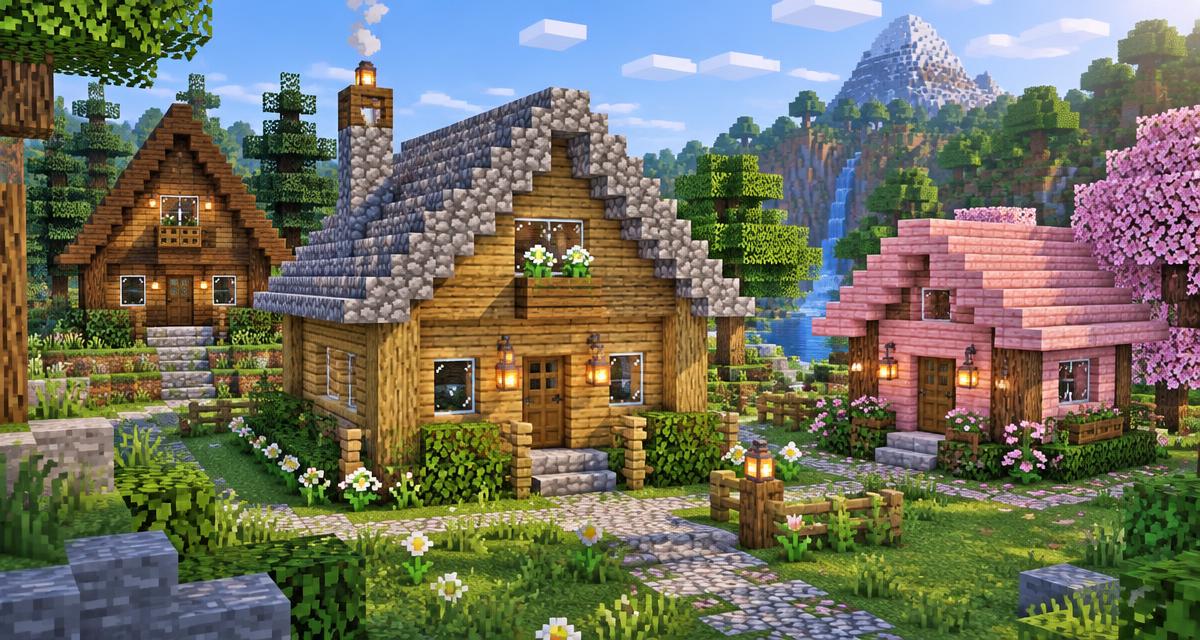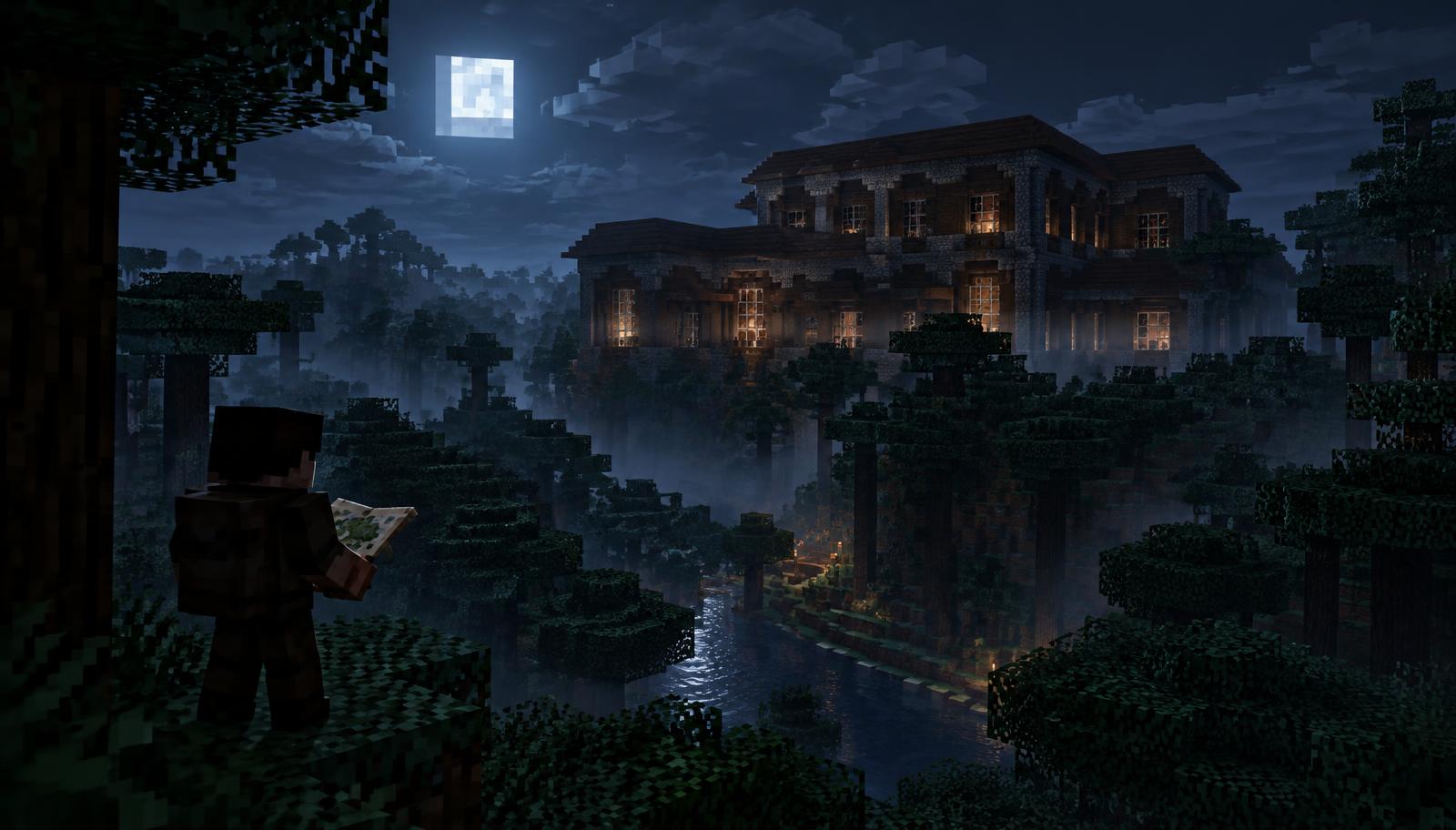
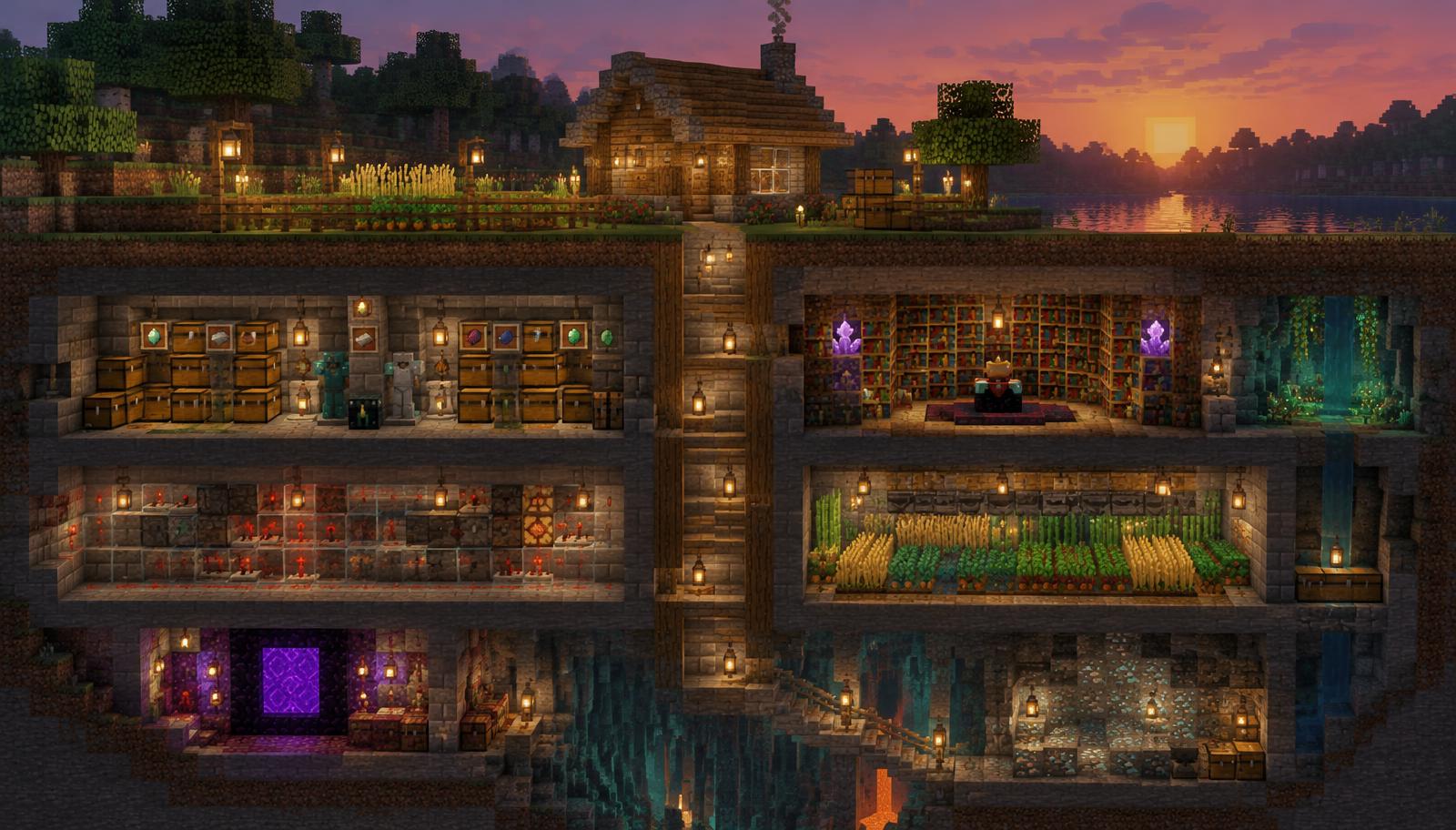
The best Minecraft base is the one nobody knows exists. On a busy multiplayer server, an impressive castle is an invitation; a plain dirt-and-oak cottage is invisible. This guide collects 15 Minecraft base ideas that look completely normal on the surface while hiding a fully equipped underground base beneath them. Each idea covers the disguise, the hidden entrance, and what to build below, so you can pick one that matches your skill level and resources.
These are original design briefs, not copied builds or exact schematics. Dimensions are suggestions you can scale up or down. Sketch the surface shell and plan your rooms with the free House Planner, then generate a full materials list with the AI Build Generator before you start digging. If you want the hidden door ideas below wired up as real circuits, the Redstone Designer and Redstone Clock Calculator will save you a lot of trial and error.
Before you dig: the four rules of invisible bases
- Dig first, disguise second. Excavate the underground rooms and the entrance shaft before building the surface house. It is much easier to place a cottage over a finished staircase than to thread a staircase under a finished cottage.
- Keep the entrance off the main path. Entrances beside doors and front gardens get found because that is where visitors click. Put yours behind the build, under a crop row, or inside a landscape feature.
- Control sound and light. Note blocks, pistons, hoppers and villagers are audible through walls. Keep noisy rooms at least eight blocks from the surface, and never let light leak through the entrance at night.
- Leave the terrain honest. A perfectly flat lawn in a hilly biome or a lone tree in a plains field attracts attention. Match the surrounding landscape instead of improving it.
A note on editions: every idea here works in both Java and Bedrock. Simple torch-key and item-frame doors behave identically, but quasi-connectivity piston tricks are Java-only, so the redstone entrances below use basic dust, torch and piston circuits that work everywhere. For deeper mechanics, the Minecraft Wiki redstone reference and piston reference are the authoritative sources.
Hidden entrances you will use in these ideas
Most of the 15 bases reuse one of five entrance types. Learn these once and you can attach them to any disguise.
- Waterfall walk-through: a two-block-deep waterfall against a cliff or inside a pond hides a gap you simply walk through. No redstone at all, and flowing water explains any damp sound.
- Painting piston door: a painting placed over a one-block gap lets you walk straight through the wall; a piston behind it can retract the painting for extra theater. Classic, silent and cheap.
- Dropped item trigger: drop a specific item onto a specific block where a hopper or comparator waits below. The door opens for a few seconds, then closes. Nothing visible marks the spot.
- Torch key: placing a redstone torch on one unremarkable block opens a piston door, and you break the torch behind you. Works in both editions with basic circuits.
- Floor hatch: a carpet, composter, cauldron or scaffolding hides a trapdoor or ladder shaft. Zero redstone, opens in one click, ideal for early-game bases.
1. The humble starter cottage
Disguise: a 7×7 oak cottage with a small wheat patch, exactly like thousands of starter houses on every server. Entrance: a floor hatch under the carpet beside the bed, dropping into a ladder shaft. Underground: a 9×9 main room with a chest wall, furnace bank and crafting corner, plus one 5×5 bedroom.
Why it works: nobody raids a starter cottage because everybody assumes it holds starter loot. Keep one decoy chest upstairs with a few seeds and torches so a curious visitor finds exactly what they expected. Upgrade path: extend the shaft down to a second level for an enchanting library once you have bookshelves.
2. The fishing hut on the dock
Disguise: a tiny shack at the end of a wooden dock, with barrels, a cauldron and a fishing rod on an item frame. Entrance: the dock itself. One specific plank is a trapdoor over a water column that carries you down through the lake floor. Underground: rooms carved into the stone beneath the lake, with glass skylights looking up into the water.
Why it works: players expect a fishing hut to contain fish. The water column entrance is silent, needs no redstone, and is invisible from the shore. Keep the underground ceiling at least three blocks below the lake bed so swimmers cannot see your light from above.
3. The abandoned ruin
Disguise: a crumbling stone-brick tower with missing wall sections, cracked and mossy variants mixed in, and cobwebs in the corners. Entrance: a painting piston door at ground level behind the rubble pile. Underground: a clean, modern base that contrasts deliberately with the decay above.
Why it works: ruins read as already-looted. The trick is restraint: real generated ruins are small and broken, so resist adding towers, banners or symmetry. Use the Castle Generator for ruin proportions, then delete half of what it suggests.
4. The wheat farm with a scarecrow
Disguise: a fenced 9×9 wheat field with a composter, a water channel and a hay-bale scarecrow. Entrance: the composter hides a ladder, or the scarecrow's hay bale sits on a piston that retracts when you drop a wheat item into the crop row. Underground: the base sits directly beneath the field, with a glass ceiling section under the water channel for a natural light well.
Why it works: farms are the most ignored builds in the game, and the crop rows hide the dropped-item trigger perfectly. Bonus: the farm is real, so the disguise literally feeds you.
5. The plain mountain shack
Disguise: a small stone shack against a mountain face with a single torch and a wooden door. Entrance: a torch-key piston door in the mountain wall behind the shack's furnace. Underground: horizontal tunnels into the mountain, opening into a large central cavern room with balconies cut into the rock.
Why it works: mountains hide sound, and a shack against a cliff is the most natural silhouette in the game. Keep the shack interior deliberately boring: a furnace, a crafting table and one chest with cobblestone.
6. The villager-style house
Disguise: a house copied block for block from a plains village design, built near a real village so it blends into the skyline. Entrance: a floor hatch beneath the bed, or a painting door behind the job-site block. Underground: a villager trading hall and breeder below, with the villagers' sounds muffled by eight blocks of stone.
Why it works: nobody inspects a village house that looks like every other village house. Use the Villager Career Tree to plan the trading hall below, and the Villager Trade Optimizer to pick which professions to breed first.
7. The pond with a waterfall
Disguise: a natural-looking pond fed by a small waterfall from a stone outcrop, with sugar cane and lily pads. Entrance: walk straight through the waterfall into a hidden gap, then down a staircase behind the rock. Underground: rooms behind the outcrop with a glass viewing wall into the pond.
Why it works: water features explain themselves. There is no building to raid at all, and the waterfall noise covers your door sounds. The hardest part is landscaping the pond so it looks generated rather than placed; irregular edges and mixed stone and gravel sell it.
8. The desert well
Disguise: a sandstone well in the desert, styled after the generated desert wells that players ignore completely. Entrance: the well's water column drops into a bubble-v column or a side gap leading to stairs. Underground: a sandstone-and-terracotta bunker with a cactus farm level and deep storage.
Why it works: generated desert wells famously contain nothing, so a handmade one is camouflage by reputation. Scale matters: keep it the same size as the real structure. The Terraform Planner helps blend the surrounding dunes.
9. The nether portal shack
Disguise: a cobblestone shack containing a lit nether portal, the most common sight on any server. Entrance: a painting door on the shack's side wall, or a hatch under the gravel floor. Underground: the real base one level down, with the portal room soundproofed so the portal hum does not guide listeners to your main rooms.
Why it works: portal shacks are infrastructure, and players treat infrastructure as public. Visitors walk in, use the portal and leave without opening anything. Plan portal links with the Nether Portal Calculator so your hidden base still connects cleanly to your nether network.
10. The tree with a hollow trunk
Disguise: one large custom oak or spruce tree in a forest of ordinary trees. Entrance: a trapdoor in the roots or a dropped-item trigger on a specific log. Underground: a vertical shaft through the trunk into a round main room ringed with storage, like a silo.
Why it works: players chop trees but rarely inspect them. Match the leaf shape and trunk thickness of the surrounding forest, and never build it in a biome where that tree does not grow. This is the most charming disguise on the list and the hardest to make look natural.
11. The storage shed that stores nothing
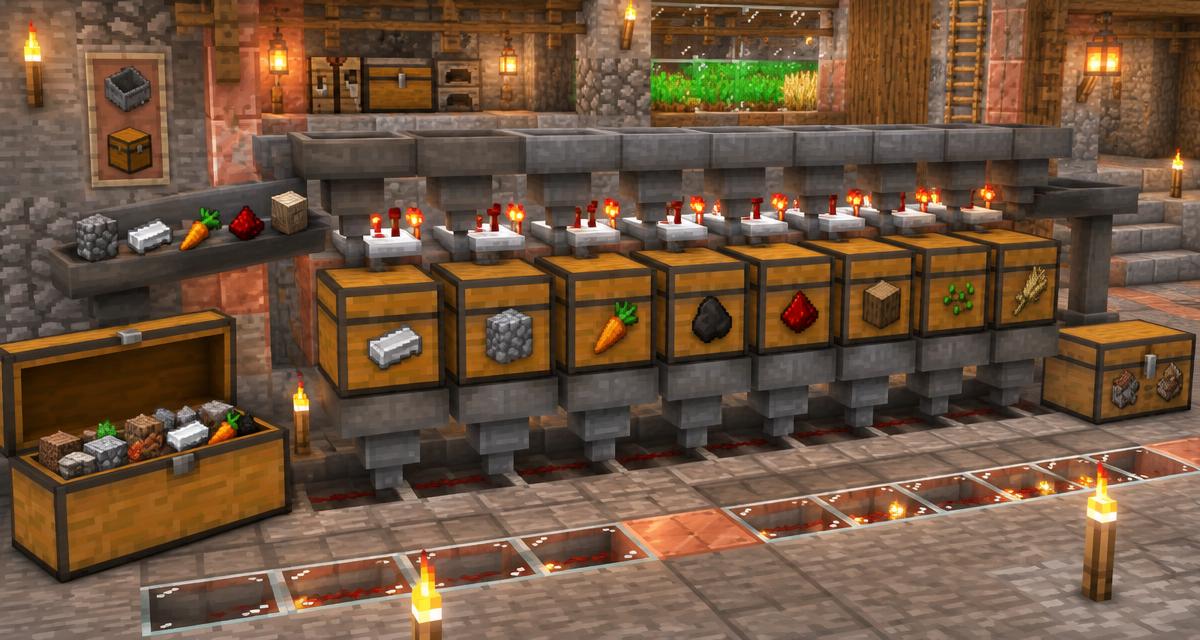
Disguise: a medium shed filled with rows of clearly labeled, nearly empty chests: cobble, dirt, gravel, sticks. Entrance: one specific chest sits on a hopper; dropping the right item into it retracts a piston staircase in the floor. Underground: the actual storage system, sorted and full, one level down.
Why it works: a visitor who opens three chests of dirt stops opening chests. The decoy inventory is the disguise. Build the real sorter with the Item Sorter Designer and keep the decoy shed's labels honest; nothing raises suspicion like a chest labeled dirt that is trapped.
12. The snow lodge
Disguise: a spruce-and-stone lodge in a snowy biome with a chimney and a small stable. Entrance: the fireplace. A powder-snow column or a piston floor behind the hearth drops you into the base. Underground: warm-toned rooms with lanterns, a smeltery and a spruce-beam ceiling.
Why it works: snowy biomes get less foot traffic, and a chimney explains a vertical shaft perfectly. Keep smoke consistent: a campfire chimney that never smokes is a tell, so leave a real campfire burning.
13. The graveyard chapel
Disguise: a tiny stone chapel surrounded by grave markers made from walls, buttons and flower pots. Entrance: one grave opens. A dropped item on the right plot retracts the marker to reveal a shaft. Underground: crypt-themed halls that lean into the theme, with an enchanting library in the deepest vault.
Why it works: players avoid graveyards the way they avoid ruins, and the build is small enough that nothing about it suggests wealth. It is also one of the few disguises that gets better with age as moss and candles accumulate.
14. The lighthouse
Disguise: a modest striped lighthouse on a coastline with a small keeper's hut. Entrance: the hut's floor hatch, or a spiral stair inside the lighthouse that stops one floor short; the final section opens with a torch key. Underground: a sea-level base bored into the cliff beneath, with glass walls looking out into the ocean.
Why it works: lighthouses are landmarks, and landmarks are treated as scenery. The keeper's hut takes all the attention while the cliff base hides in plain sight. If you build near a monument, the Ocean Monument Finder helps you pick a dramatic coastline.
15. The mineshaft entrance
Disguise: a weathered mineshaft headframe with a rail line disappearing into a dark tunnel, support beams and cobwebs. Entrance: the tunnel is real but short; a painting on its side wall opens into your actual staircase. Underground: the base branches off the decoy tunnel, with the real mine deeper still.
Why it works: an old mine reads as already stripped of ore. The double bluff is the charm: visitors who explore the tunnel find a dead end with a few coal veins, which is exactly what an abandoned mine should contain. Meanwhile your smeltery, storage and enchanting setup sit behind a painting they walked past.
Keeping a secret base secret on multiplayer
- Vary your approach route. Walking the same line from spawn to base every session wears a visible path and gives observant players a direction.
- Never enter while others are nearby. Check the player list, and on servers with locator maps, wait until neighbors log off before using the entrance.
- Split your valuables. Keep a believable amount of mid-tier loot in the decoy chests and your irreplaceable items in an ender chest, which no other player can open.
- Avoid map-visible edits. Huge flattened areas, perfect circles and drained water show on maps even when the build itself is hidden.
- Silence the base. Hoppers, pistons and villagers are audible; bury noisy systems deep or move them to a separate utility site away from the entrance.
If you run the server rather than play on it, a hidden base is also a great admin vault or event space. The Server Config Validator and Server Permissions Builder help you lock down the administrative side while your in-game base stays invisible.
Plan it before you dig it
Every idea above follows the same build order: pick the disguise, dig the underground level, wire the entrance, then build the surface shell last. Sketching first saves hours. Use the House Planner for the surface footprint, the AI Build Generator for a full materials breakdown, and the Redstone Designer for the door circuit. If you want more surface inspiration, our 25 easy Minecraft house ideas guide is full of ordinary-looking shells that make excellent disguises, and the woodland mansion guide covers exploration bases far from spawn where secrecy matters most.