Trial chambers are the biggest combat structure Mojang has ever added to Minecraft. Added in the 1.21 Tricky Trials update, they are sprawling underground dungeons of tuff and copper, packed with wave-based trial spawners, trapped corridors, and two tiers of loot vaults. They are also the only way to get the heavy core for crafting the mace, the flow and bolt armor trims, and the breeze rods that make wind charges. This guide covers how to find a trial chamber fast, how every room and spawner works, the difference between normal and ominous trials, and the full loot picture so you know exactly what to bring and what you can walk out with.
The short answer
What are trial chambers in Minecraft?
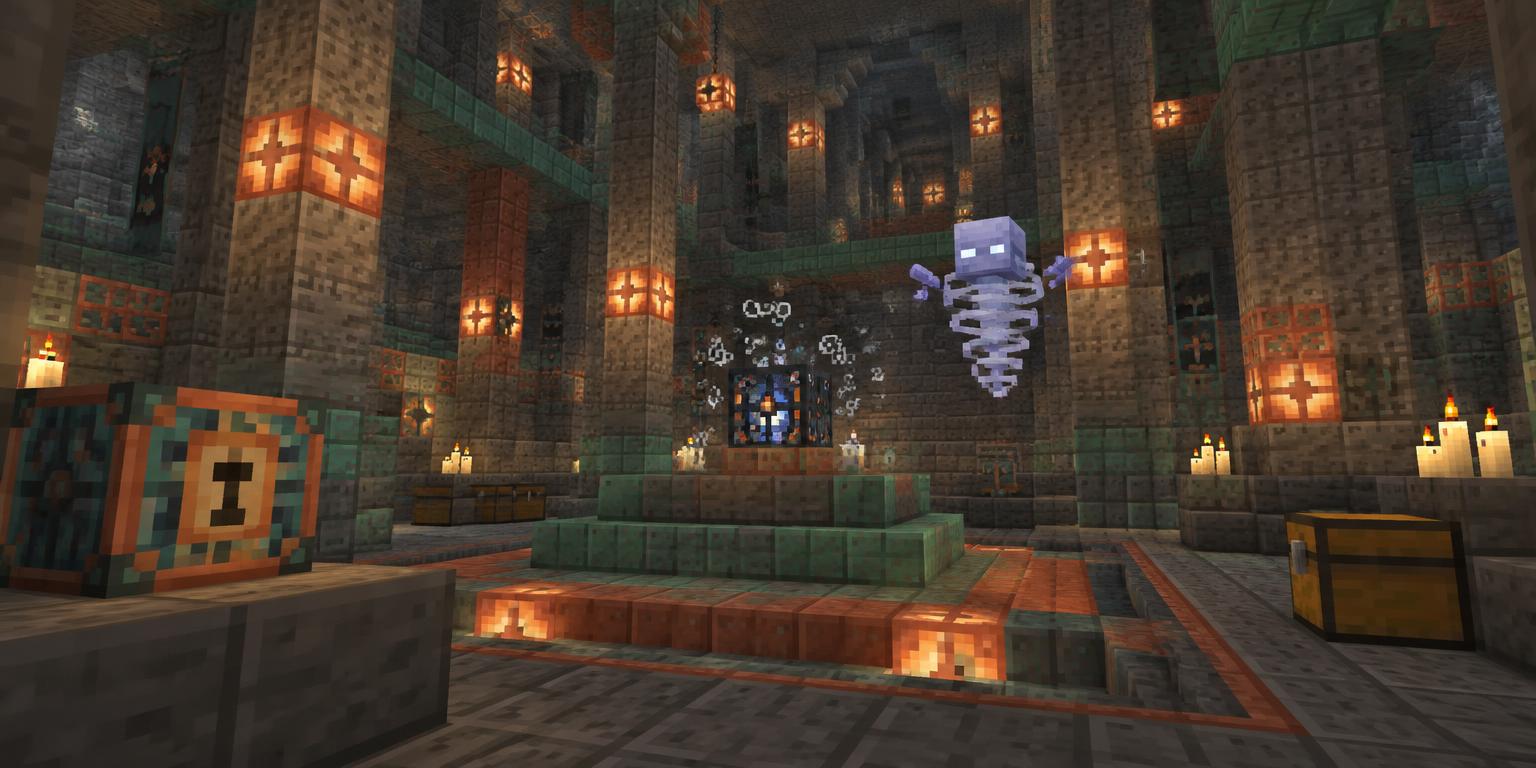
A trial chamber is a procedurally generated combat dungeon added in Minecraft 1.21 for Java and Bedrock. Each chamber is a network of rooms and corridors built from tuff, tuff bricks, copper blocks, copper bulbs and chiseled copper, with waxed variants that never oxidize further. The structure is designed around combat trials: rooms contain trial spawners that summon waves of mobs scaled to the number of players nearby, and clearing a wave earns loot for every participating player, which makes trial chambers one of the few structures that genuinely reward multiplayer.
The headline loot is exclusive. Trial chambers are the only place in the game to obtain the heavy core (the rarest mace ingredient), breeze rods from the Breeze mob, the flow and bolt armor trim smithing templates, the guster and flow banner patterns, and ominous bottles, which trigger the harder ominous version of every trial. If you want to 100 percent a survival world, you cannot skip them.
How to find trial chambers
Trial chambers generate below the surface of the Overworld, centered in the deepslate layers, so you will usually hit one between roughly Y level -20 and Y level 40. They are large but not especially common, so wandering caves is the slow way. You have three faster options.
1. Use a trial chamber finder tool
If you know your world seed, the fastest method by far is a seed-based locator. Enter your seed and coordinates in the free trial chamber finder and it shows the nearest trial chambers with exact coordinates, so you can dig straight to one or plan a nether tunnel. This works for both Java and Bedrock worlds and saves hours of caving.
2. Buy a trial chamber map from a cartographer
In pure survival without tools or commands, level up a cartographer villager to journeyman. Journeyman cartographers can sell a trial chambers explorer map for emeralds and a compass, which marks the nearest unmapped trial chamber with a destination icon, exactly like a woodland mansion map. Lock the trade by buying it once, and the same villager can restock more maps to different chambers later.
3. Use the /locate command
On a world with cheats enabled, run /locate structure minecraft:trial_chambers and the game returns the coordinates of the nearest one, with a clickable teleport in chat. This is the standard method for creative testing and for checking whether a seed is worth keeping before you commit to it.
How trial spawners work
Trial spawners look similar to classic monster spawners but behave completely differently. Instead of spawning endlessly, a trial spawner activates when a player comes within range, then summons a fixed wave of mobs. The wave size scales with the number of players nearby, so a solo player might face three mobs while a group of four faces a dozen. Kill every mob in the wave and the spawner ejects rewards, one set per player, then enters a 30 minute cooldown before it can run again.
- Melee spawners summon zombies, husks or slimes depending on the room.
- Small melee spawners summon spiders, cave spiders, baby zombies or silverfish.
- Ranged spawners summon skeletons, strays or the bogged, the poisoned-arrow skeleton variant found in swamps and trial chambers.
- Breeze spawners appear only in special breeze chambers and summon the Breeze itself.
The reward you care about most is the trial key. Clearing a trial spawner has a chance to eject a trial key alongside the emeralds, arrows and other drops, and each key opens one vault block. Because every player gets their own reward roll, running chambers with friends multiplies your key income instead of splitting it.
The Breeze: what you need to know
The Breeze is the star mob of the trial chambers and the reason breeze chambers are the hardest rooms. It hops around the arena and fires wind charges, projectiles that explode into a burst of wind, knocking players several blocks into the air and occasionally into a long fall. Two facts make it dangerous: it deflects all arrows and most projectiles, so your bow is useless, and the fall damage from its knockback is often the real killer in rooms with high ceilings and ledges.
Bring a strong sword or, once you have one, a mace, since the mace's smash attack is built for exactly this kind of fight. Slow Falling potions neutralize the knockback threat entirely. When killed, the Breeze drops breeze rods, which craft into wind charges and, combined with a heavy core, into the mace. See the full stats, fall damage formula and enchantment list in the mace guide.
Vaults, trial keys and the normal loot pool
Vaults are the decorative blocks with a glowing keyhole scattered through the chambers, usually near cleared trial rooms and along corridors. Each vault opens with one trial key and pays out loot once per player, so a full server can all open the same vault. The normal vault pool includes emeralds, enchanted books, iron and diamond gear, golden apples, ominous bottles, and the bolt armor trim smithing template.
Ominous bottles matter more than they look. Drinking one gives you the Bad Omen effect at a random level, and Bad Omen transforms into Trial Omen the moment you step near a trial spawner. Trial Omen is what unlocks the second, harder tier of the entire structure.
Ominous trials, ominous keys and the heavy core
While you carry the Trial Omen effect, every trial spawner you approach upgrades into an ominous trial spawner, recognizable by its blue flame and tougher waves: mobs spawn with better armor, enchanted weapons, and potion effects, and breeze spawners get noticeably nastier. Clearing an ominous trial spawner can eject an ominous trial key instead of a normal one.
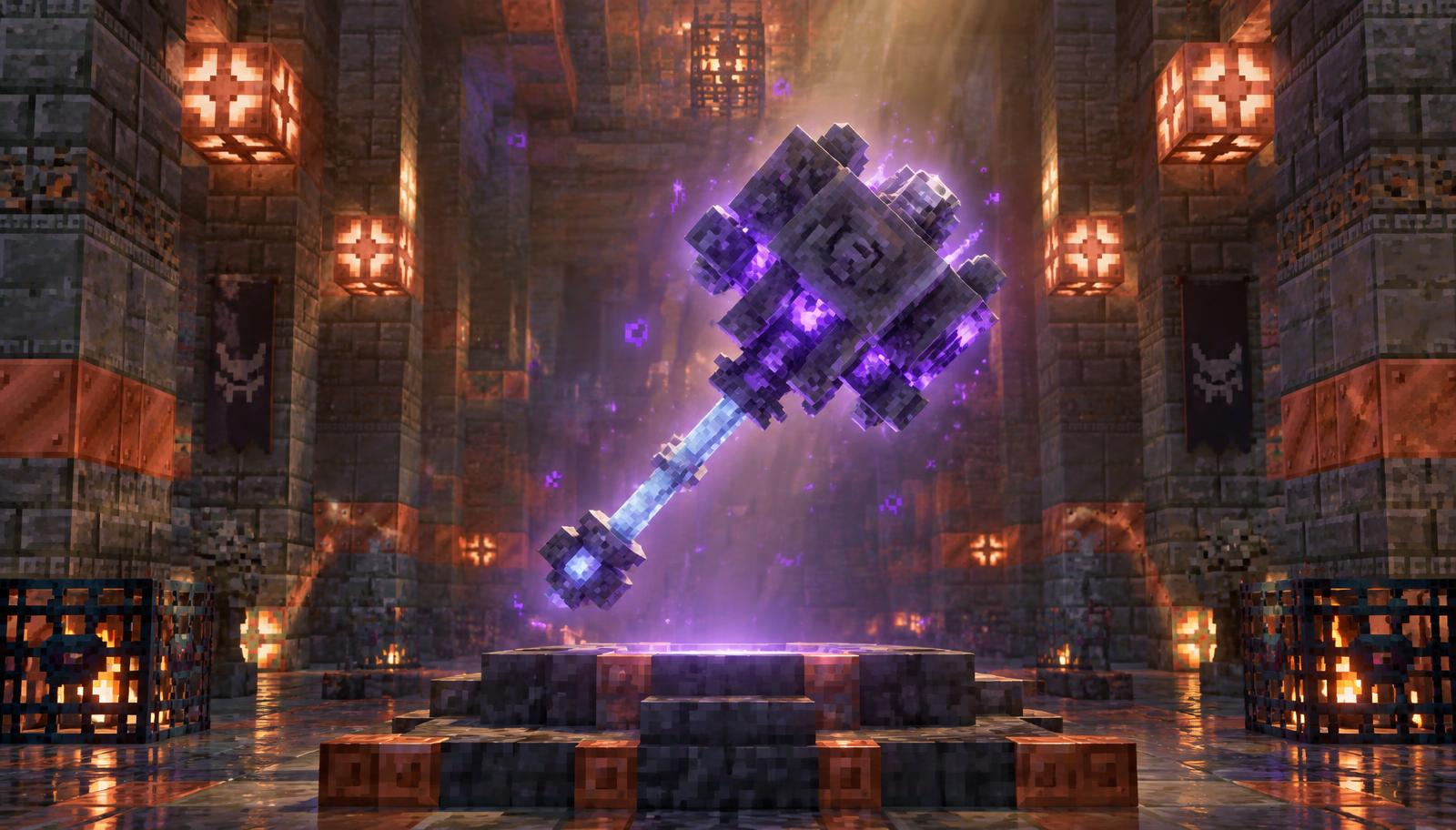
Ominous keys open ominous vaults, the rarer variant usually tucked high on ledges or hidden behind chambers. The ominous vault loot table is the best in the structure: enchanted golden apples, high-level enchanted books (including the mace-exclusive Density, Breach and Wind Burst), the flow armor trim template, the flow banner pattern, and the jackpot, the heavy core.
Exclusive loot you can only get here
- Heavy core: mace crafting ingredient, ominous vaults only.
- Breeze rods: dropped by the Breeze, craft into wind charges or a mace.
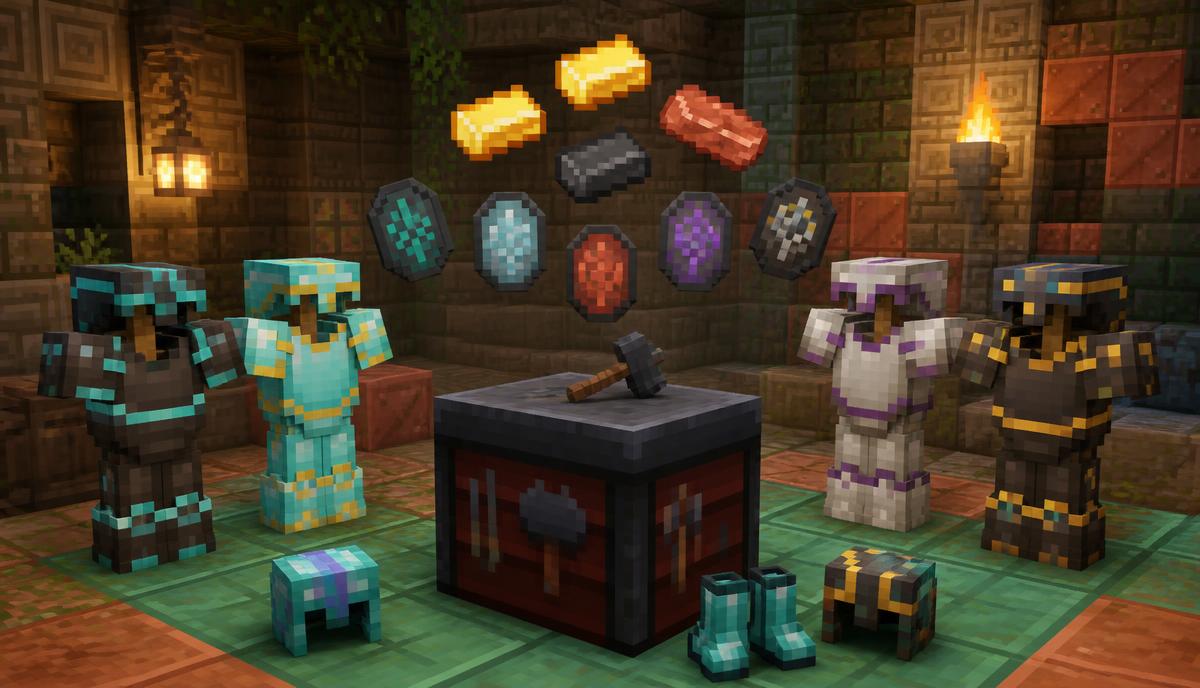
- Flow armor trim: ominous vaults; bolt armor trim: normal vaults. Duplicate both with diamonds like any other trim, as covered in the armor trims guide.
- Flow and guster banner patterns: vault loot; design with them in the free banner generator.
- Wind Burst, Density and Breach enchanted books: the three mace-exclusive enchantments.
- Ominous bottles: retrigger ominous trials whenever you want another run.
How to prepare: gear and tactics
- Wear full Protection IV diamond or netherite armor; the bogged's poison arrows and baby zombie swarms punish thin armor fast.
- Bring a Smite V sword for the undead-heavy waves, and a mace once you craft one for the Breeze.
- Skip the bow for breeze rooms since the Breeze deflects projectiles; keep it for skeleton hallways.
- Pack Slow Falling potions or a water bucket to cancel wind charge knockback.
- Carry milk to clear poison from the bogged, and food plus golden apples for sustain.
- Drink an ominous bottle before you enter, not after, so every spawner on the run is upgraded.
- Mark cleared spawners with torches or a block tower; chambers are maze-like and it is easy to lose track of which trials you have finished during the 30 minute cooldown.
Java vs Bedrock differences
Trial chambers generate in both editions and the mechanics are nearly identical: same spawners, same keys, same vaults. The practical differences are small. Structure coordinates differ between editions for the same seed, so always pick the right edition in the trial chamber finder before writing down coordinates. Bedrock combat has no attack cooldown, which makes spam-clicking the Breeze slightly easier, and Bedrock vault loot chances match Java's since the 1.21 parity passes.
Farming trial chambers efficiently
Because trial spawners cooldown for 30 minutes and vaults pay out once per player, the optimal loop is a rotation, not a camp. Locate two or three chambers near each other with the trial chamber finder, clear one, move to the next, and return when the cooldowns have reset. Connect them with a nether tunnel for fast travel, dividing overworld coordinates by eight as explained in the nether portal guide. Bring friends whenever you can: more players means bigger waves, more reward rolls, and more keys per run for everyone.