Minecraft fence recipe
Fences need a crafting table because the recipe is 3 columns wide. The wood type of the planks decides the fence type, and both planks and sticks must be in the correct spots.
- Punch a tree to get logs, then place a log in your inventory grid to get 4 planks per log.
- Turn 2 planks into 4 sticks in the inventory crafting grid.
- Open a crafting table.
- Row 1: plank, stick, plank. Row 2: plank, stick, plank.
- Drag out 3 fences per craft.
Each craft consumes 4 planks and 2 sticks, so a single log plus a couple of sticks fences off about three blocks of perimeter. For a big pen it is worth counting first, and our material calculator work in the house planner can size the perimeter for you.
Every fence type and what it costs
- Oak, spruce, birch, jungle, acacia, dark oak, mangrove, cherry, pale oak, bamboo and crimson or warped fences all use the same 4 planks plus 2 sticks pattern with matching planks.
- Nether brick fence uses 4 nether bricks in the plank positions and 2 nether brick items in the stick positions, and it is fireproof.
- Bamboo fence is crafted from bamboo planks and is the cheapest per block if you have a bamboo farm.
- Crimson and warped fences come from the nether and never burn from a nearby fire block, unlike overworld woods.
- Every fence gives 3 per craft except none. All of them give 3.
Fences of different wood types still connect to each other. The only fence that refuses to connect to the rest is the nether brick fence, which links only to other nether brick fences and to walls.
How to make a fence gate
You need a gate to walk into your own pen without breaking the fence line.
- Open a crafting table.
- Row 1: stick, plank, stick. Row 2: stick, plank, stick.
- That gives 1 fence gate.
- Gates open by right-click and by redstone signal, so they work in automated farms.
- Mobs cannot open fence gates, but villagers can path through open ones, and a gate placed a block lower than the fence still blocks jumps.
- Unlike fences, a fence gate is only 1.5 blocks tall when closed and completely passable when open.
How tall is a fence and what can jump it
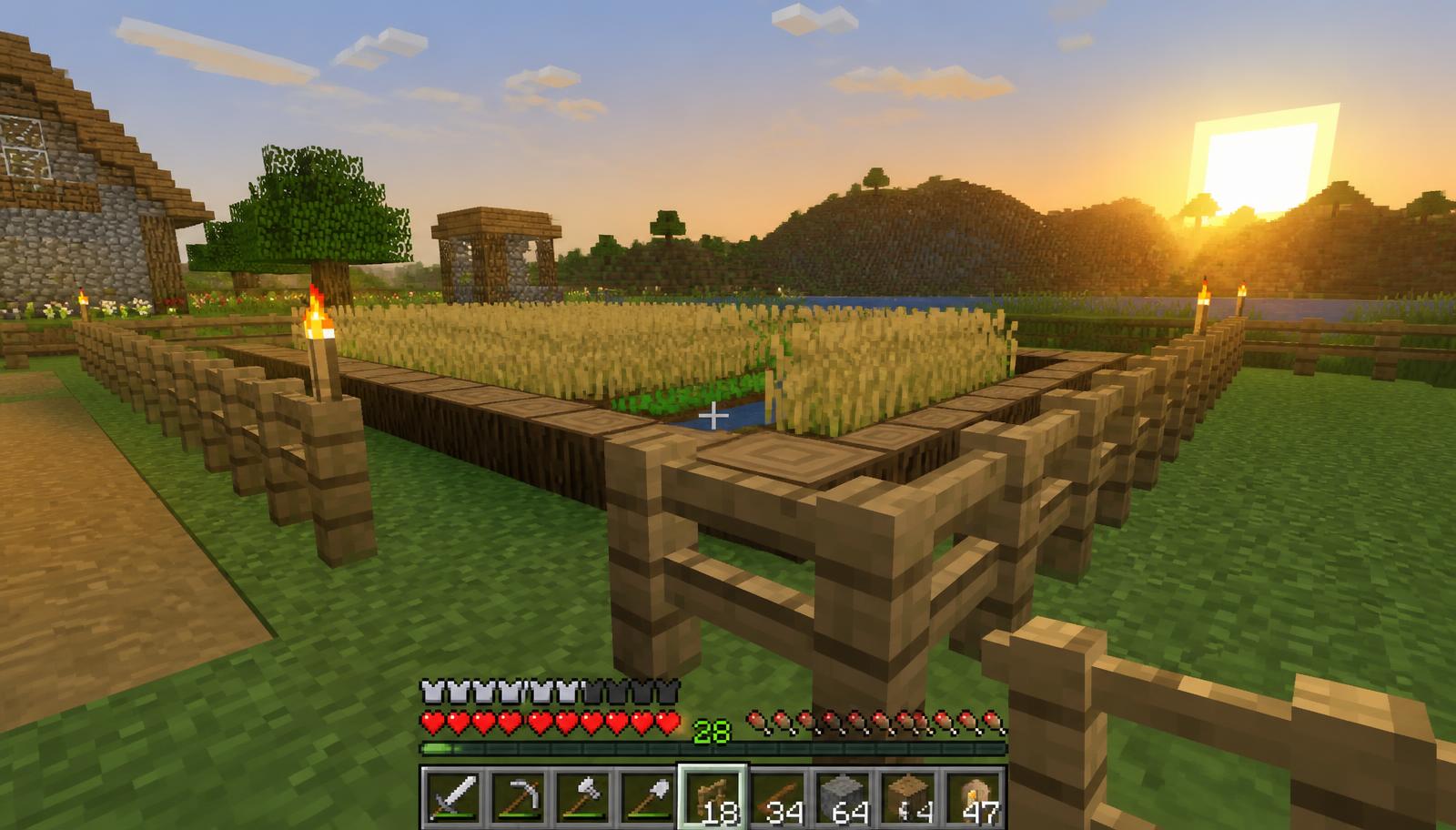
A fence occupies one block of space but has a collision height of 1.5 blocks. Players jump 1.25 blocks, so a single fence row is enough to hold you in. Most mobs are the same.
- Cows, sheep, pigs, chickens and horses cannot jump a fence.
- Spiders can climb any wall including fences, so a fully enclosed roof is needed for spider-proofing.
- Endermen teleport past fences, so a lit and roofed enclosure is the real fix.
- Foxes and cats can jump onto a fence post from a nearby block, so keep a two-block gap between fences and any raised terrain.
- Baby animals fit through gaps at the corners in some versions, so build a closed rectangle without diagonal joins.
Building a safe animal pen
- Pick flat ground near your base and mark out the corners with four fence posts.
- Fill the edges with fences and leave a one-block gap for the gate.
- Light the interior so mobs cannot spawn inside.
- Lead animals in with wheat for cows and sheep, carrots for pigs, seeds for chickens, or use a lead to drag them.
- Breed pairs with their preferred food to grow the herd.
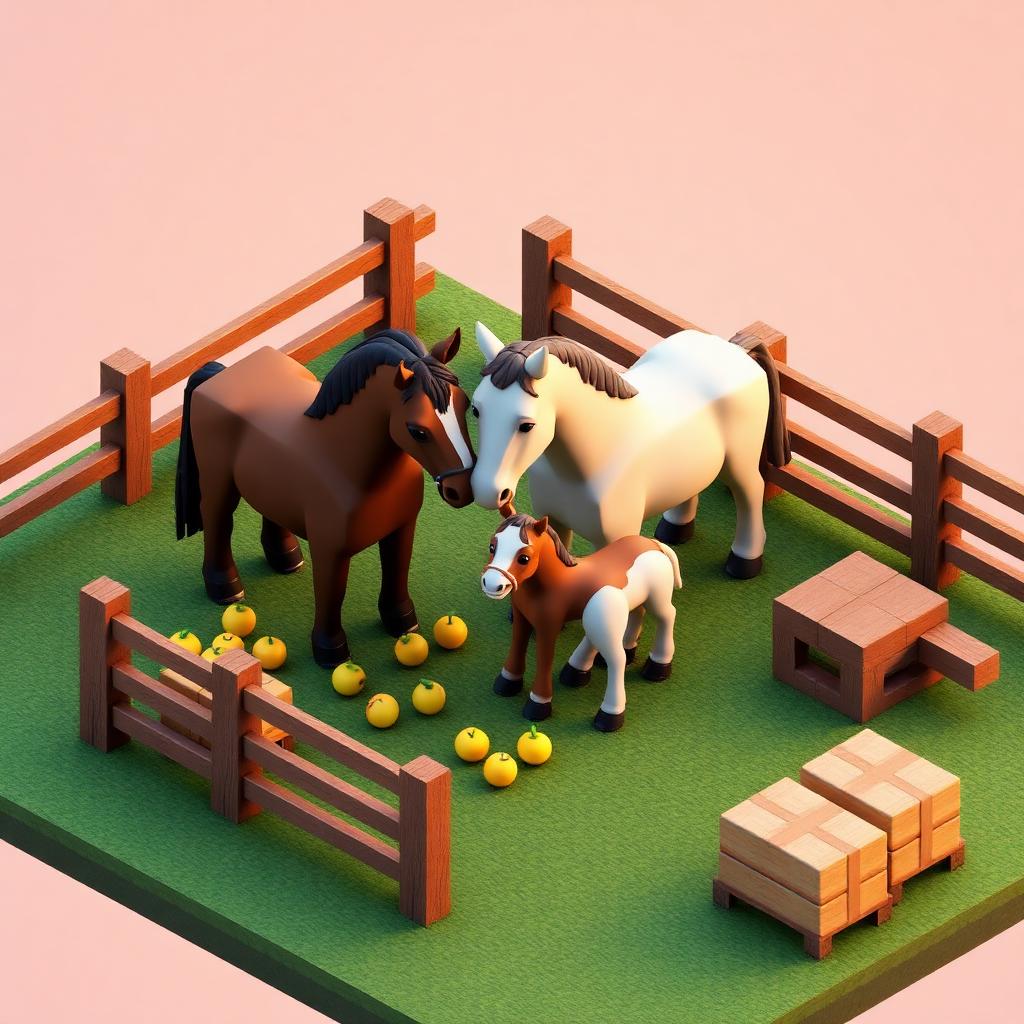
For horses, make the pen at least 7x7 so they have room to move without pushing against the gate. See how to breed horses in Minecraft for the stat inheritance rules before you start a breeding program.
Fence decoration tricks builders actually use
- Table legs — a single fence post under a trapdoor or a carpet reads as a table in any interior.
- Lamp posts — a stack of two or three fences with a lantern hung on top makes a street light.
- Chimneys — a fence post above a campfire lets the smoke rise through and doubles the smoke column height.
- Rustic railings — fences plus trapdoors along a balcony give more texture than walls.
- Roof supports — dark oak fences under an overhang break up long eaves on cottage builds.
- Nether brick fences on blackstone read as wrought iron for gothic and castle builds.
If you are planning a whole build around the fencing, the house planner and interior designer give you layouts and block counts before you place anything.
Fence vs wall vs gate
- Fence — 1.5 block collision, connects to other fences and gates, made from planks and sticks, burns if wooden.
- Wall — same 1.5 block collision, made from stone family blocks in a 6-block recipe, connects to other walls and to iron bars.
- Fence gate — the openable section of a fence line, 1 per craft, redstone-operable.
- Iron bars — 1 block tall visually and jumpable, so not a mob-proof fence substitute on their own.
Common fence mistakes
- Crafting in the 2x2 inventory grid. The fence recipe needs the 3-wide crafting table.
- Swapping the plank and stick positions. Sticks go in the middle column, planks on the outside.
- Mixing plank types in one craft. All four planks must be the same wood.
- Expecting nether brick fences to connect to wood. They will not.
- Leaving a one-block hole at a corner. Animals and baby mobs slip out through it.
- Putting a wooden fence next to a lava source or a campfire. It catches fire and the whole line burns.
Related guides and tools
Pair this with how to make a lead in Minecraft for moving animals, how to make a bed in Minecraft for the rest of your starter base, and the house planner for full block counts.