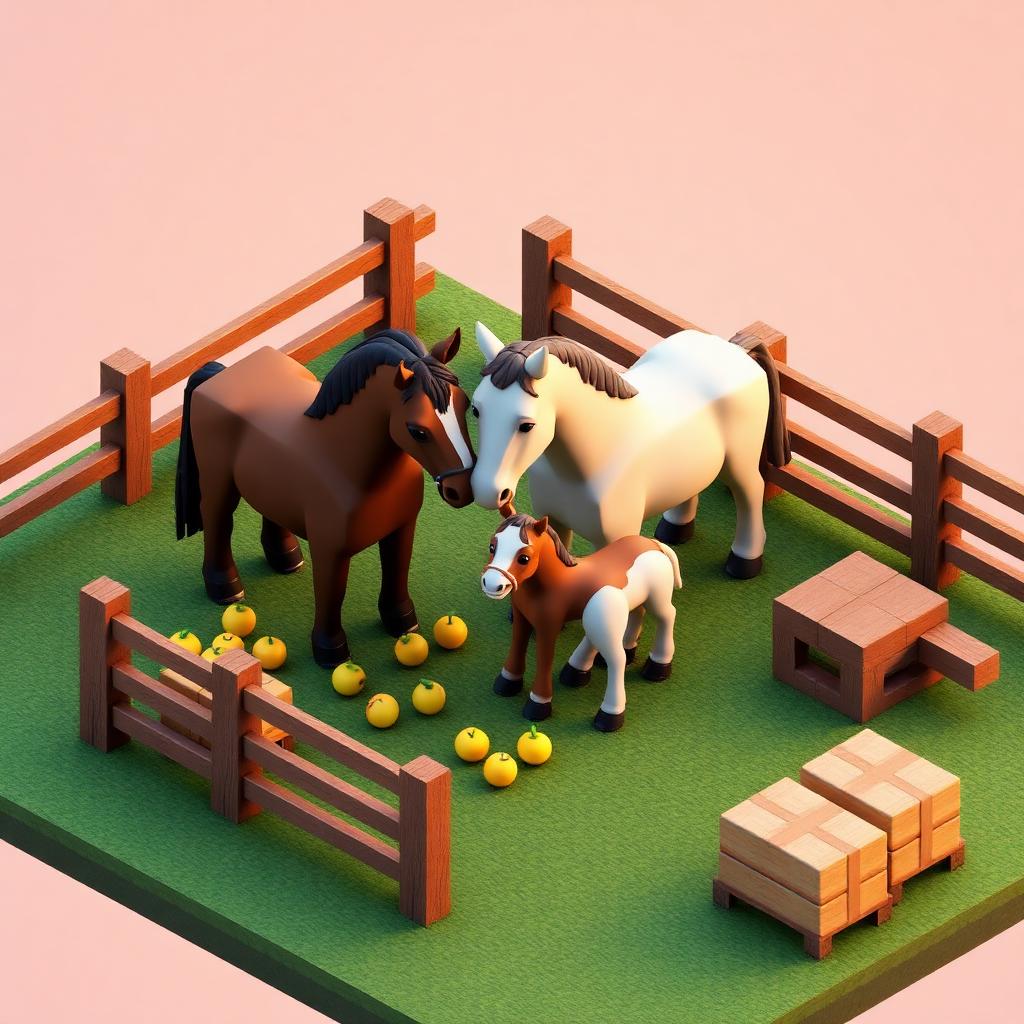

Leads are one of Minecraft's most underrated utility items — they let you move animals, transport villagers across biomes, build modular farms, and even (in modern versions) drag hostile mobs into custom kill chambers. This complete 2026 guide covers the recipe, every source of string and slimeballs, every mob you can leash, fence-knot mechanics, and the multi-mob transport tricks base builders use every day. If you're planning a farm or a base, pair this with our horse breeding guide and villager trade optimizer to make sure the mobs you leash are worth moving.
The lead recipe (Java & Bedrock)
The lead recipe is identical on both editions and outputs 2 leads per craft — always plan slimeballs in pairs.
Crafting grid layout
- Row 1 (top): string, string, empty
- Row 2 (middle): string, slimeball, empty
- Row 3 (bottom): empty, empty, string
- Total: 4 string + 1 slimeball → 2 leads
Getting string
String is cheap and comes from four sources — pick whichever fits where you are in the game.
- Spiders — every spider drops 0–2 string. A basic mob farm produces stacks per hour.
- Cobwebs — mine with shears or a sword for 1 string per cobweb. Common in mineshafts and woodland mansions.
- Jungle temple chests — usually 1–3 string per chest.
- Fishing — a rare 'junk' catch. Fine for one-off leads, terrible in bulk.
Getting slimeballs (the real bottleneck)
Slimeballs are the one part of the recipe that requires planning. There are three reliable sources.
1. Slime chunks (best in bulk)
About 1 in 10 chunks in the Overworld is a 'slime chunk' where slimes spawn between y=−64 and y=39 regardless of light level. Find one with a slime chunk finder, dig out a 3-chunk × 3-chunk × 3-high room at y=−30, light every non-slime area around it, and AFK 20 blocks above. A basic slime farm produces 200–400 slimeballs/hour.
2. Swamp slimes at night
Slimes spawn naturally on the surface in swamp and mangrove swamp biomes between y=50–70, but only during a full moon and only at light level 7 or lower. Slow, but a good early-game source before you commit to a slime chunk farm.
3. Sneezing baby pandas
Baby pandas have a small chance to sneeze and drop 1 slimeball. Breed pandas in a jungle biome, then AFK next to the babies — this is a novelty source, not a farm, but it's the only slime-free way to make leads.
How to leash a mob
Once you have a lead, using it is a two-click flow.
- Hold the lead in your main hand.
- Right-click (or use the 'use item' button) on the mob you want to leash. A visible knotted rope appears connecting you and the mob.
- Walk — the mob follows within a 10-block radius.
- To tie the mob to a fence, right-click the fence. A fence knot appears and the mob is now anchored.
- To free the mob, right-click either the mob or the fence knot again. The lead drops as an item you can pick up.
Every mob you can leash (2026 update)
Before 1.20.5, leads only worked on passive/neutral mobs. Modern versions massively expanded the list.
Always leashable (passive & neutral)
- Horses, donkeys, mules, camels, llamas, trader llamas
- Cows, sheep, pigs, chickens, goats, striders, sniffers
- Wolves, cats, ocelots, foxes, parrots, allays
- Villagers (yes — this is how you relocate them without minecarts, in 1.20+)
- Iron golems, snow golems
- Squids, dolphins, axolotls, glow squids
New in 1.20.5+ (Java) / 1.21+ (Bedrock)
- Zombies, skeletons, husks, strays, drowned
- Creepers, spiders, cave spiders, endermen (careful!)
- Piglins, piglin brutes, hoglins, zoglins
- Blazes, ghasts, phantoms, vexes, guardians
- The wither (yes, really — but only after it's summoned)
Cannot be leashed
- The ender dragon
- Bosses that aren't the wither
- Players (you can't rope a friend)
- Armor stands and item frames
Fence knots and multi-mob transport
The single biggest lead trick is that a single fence post can hold up to 10 leashed mobs simultaneously. That means you can leash a whole herd of 10 villagers, tie them all to one fence, then break the fence when you arrive — every mob drops in place.
- Leash mob 1 → tie to fence. Fence knot appears.
- Leash mob 2 → right-click the same fence. It attaches to the existing knot.
- Repeat up to 10 mobs.
- Break the fence (or the knot) → every mob is freed at once, leads drop.
Wandering trader leads (free leads!)
Every wandering trader spawns with two leashed llamas. When the trader despawns or is killed, both llamas drop their leads as items. Set a simple 'wandering trader trap' near your base — a 2×2 pit with soul sand at the bottom so the trader can't escape — and you get 2 free leads per spawn cycle plus the llamas themselves for pack transport.
What surfaces work as anchors?
Not every block accepts a lead. Here's the definitive 2026 list.
- Fences (all wood types + nether brick fence) — the primary anchor
- Walls (cobblestone, mossy, brick, sandstone, etc.) — work the same as fences
- Nether brick fence gates and wooden gates — work on Java
- Bedrock 1.21+: any solid block can hold a knot
- Do NOT work: leaves, glass panes, iron bars, trapdoors, ladders, scaffolding, buttons, pressure plates
Every practical use for leads
- Herd management — move sheep to your wool room, cows to a slaughterhouse, or horses to a stable without pushing them one block at a time.
- Villager transport — the fastest overland method for relocating villagers to your trading hall.
- Boat + lead tricks — hold a lead on a mob in a boat to drag ridable mobs across oceans. Especially useful for llamas and camels.
- Custom mob farms — leash raiders during a raid to control kill positions.
- Decoration — a leashed cat outside your base, a horse tied to a fence, or a llama caravan outside a trading hall makes builds feel alive.
- Two-mob leverage — leash a slow mob (like a cow) to a faster one (like a horse) to drag it, though the range still caps at 10 blocks.
Common mistakes
- Sprinting past the 10-block limit — the lead snaps, mob wanders off, and if you're over lava it's gone.
- Trying to leash mobs through walls — the lead ignores line-of-sight, but the 10-block chase distance is 3D, so a mob stuck behind a wall will path around and often get lost.
- Losing leads to despawns — if you tie a mob to a fence and log out for hours, some mobs (like wandering trader llamas) can despawn and drop the leads on the ground where they eventually disappear.
- Using them on the ender dragon — despite what memes say, this doesn't work.
- Attaching to non-fence blocks — leaves and glass panes look like they should work, but they don't. Always use a real fence or wall.
Leads in your base workflow
Leads unlock the whole animal-farming and villager-trading loop. Set up a slime chunk farm for infinite slimeballs, keep a small spider farm running for string, and craft leads in 20-pack batches. Use them to move breeding pairs of every animal into a central barn, relocate villagers into a full trading hall, transport striders through the Nether, and build ambient decorations across your base. Combined with a horse breeding program, you'll never chase another mob manually.