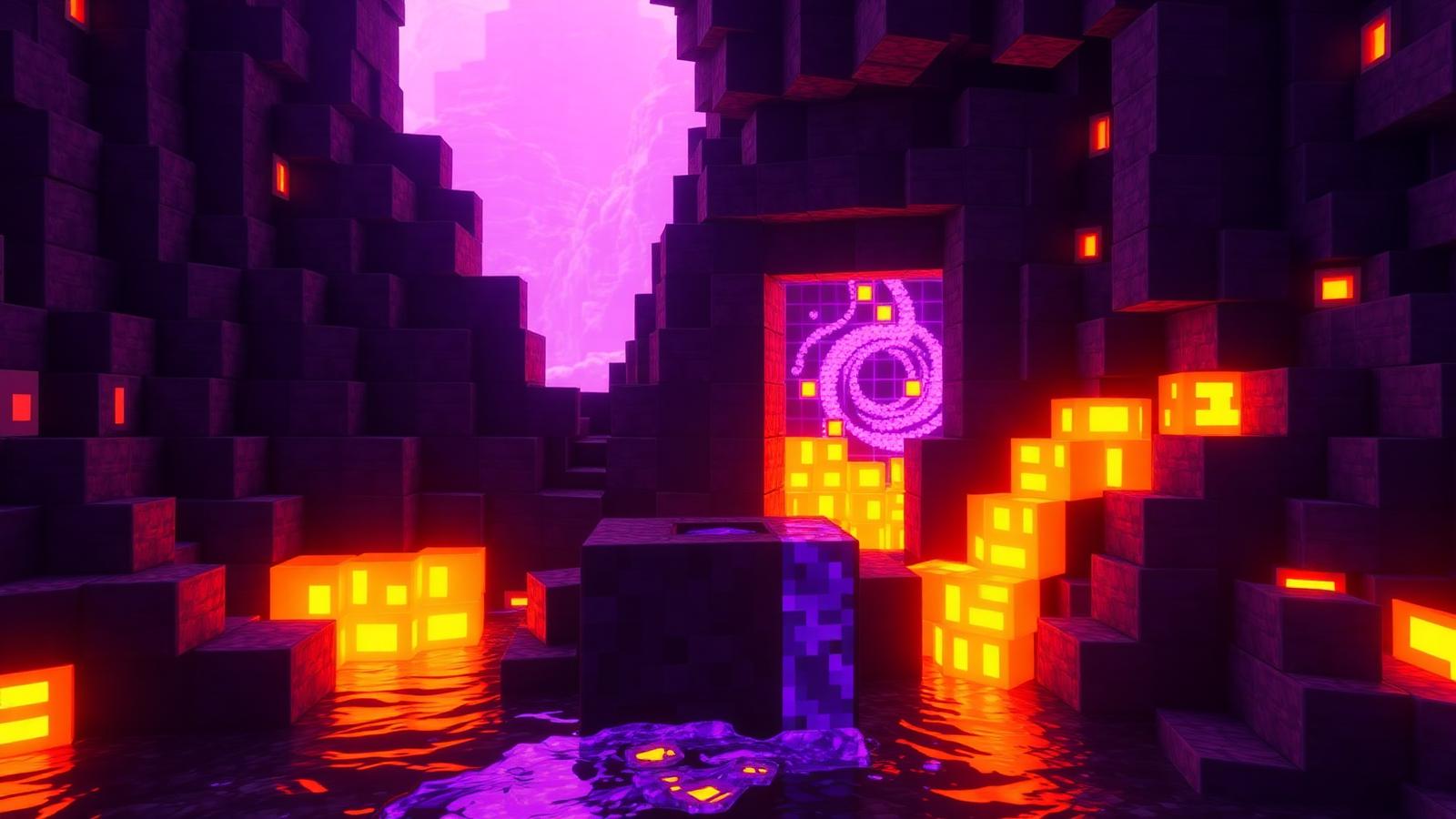
Obsidian is the toughest craftable block in Minecraft and the entire reason you can build a Nether portal at all. This guide gives you the one-tick recipe, the fastest way to farm it in bulk, every pickaxe timing, and the full rulebook for crying obsidian, respawn anchors, and blast resistance in the 2026 versions of Java and Bedrock.
Step 1: Find or place a lava source block
Obsidian only forms from a lava SOURCE block — not flowing lava. Source blocks are the still, unmoving squares of lava you find in lava lakes or dropped from a bucket.
- Explore below Y=16 in the Overworld — natural lava lakes are the fastest source of source blocks. Since 1.18, huge lava seas start around Y=-54.
- Alternatively, fill a bucket from any lava lake in the Nether and bring it back — one bucket = one source block = one obsidian.
- Never try to make obsidian from flowing lava. Water pouring onto flowing lava creates cobblestone or stone, not obsidian.
Step 2: Pour water onto the lava source
Stand one block above and to the side of the lava source, aim at the source block, and right-click / use a water bucket on it. The lava hardens into obsidian instantly — you have exactly one tick to react, which is a non-issue because the reaction is deterministic.
- Water source touching lava source → obsidian.
- Flowing water touching lava source → obsidian (this is how portal-frame farms work).
- Water source touching flowing lava → cobblestone.
- Flowing water touching flowing lava → stone.
This four-line rule is the entire physics of obsidian generation. Every farm design comes back to it.
Step 3: Mine it with the right pickaxe
Obsidian requires a diamond or netherite pickaxe. Iron, gold, stone, and wooden pickaxes break the block but drop nothing — and they waste 15–20 seconds of your life while doing it. Here are the exact mining times on unenchanted flat ground:
- Diamond pickaxe: 9.4 seconds per block
- Netherite pickaxe: 8.35 seconds per block
- Diamond + Efficiency V: 2.85 seconds per block
- Netherite + Efficiency V + Haste II beacon: 1.4 seconds per block
For any serious obsidian project — a full Nether hub, an End Crystal setup, a wither-cage — put Efficiency V on your best pickaxe first. It cuts total mining time by 70% and is the single biggest quality-of-life upgrade for late-game builders. Use our enchanting calculator to plan the XP levels needed.
How much obsidian do you need for a Nether portal?
The minimum functional Nether portal frame uses 10 obsidian blocks in a 4-wide × 5-tall rectangle with the corners left empty. A full 'complete' frame with corners uses 14. Both light identically.
- Minimum portal: 10 obsidian (hollow-corner 4×5 frame).
- Standard portal: 14 obsidian (filled corners look cleaner and cost the same to mine).
- Max legal portal: 23×23 (528 obsidian on the perimeter). The game will still light it, but anything bigger silently refuses.
Portals link across dimensions based on their coordinates — a 1:8 ratio between Overworld and Nether. Get the exact linking coordinates with the Nether portal calculator so your two-way trip drops you exactly where you want to build a hub.
The fastest obsidian farms
Method 1 — Portable pool (beginner)
For a first Nether trip, dig a 4-wide × 1-deep trench next to a lava lake, fill the trench with water, and let it flow onto the lava's edge. Each source block converts one at a time. This is slow (about 1 block every 2 seconds after you factor in mining) but requires no setup.
Method 2 — Ravine dip farm (fastest per lava bucket)
Find a lava lake in a ravine or the Nether. Build a two-block-tall wooden platform above the lake, put a water source on top of the platform, and let the flowing water fall onto the edge of the lake. Every lava source block on the top layer of the lake converts to obsidian. You can strip an entire lake's surface in a single sitting — 20+ blocks per bucket of the water you never actually use up.
Method 3 — Dispenser lava generator (bulk / afk)
For truly serious volume, build a redstone loop that pushes lava buckets from a dispenser onto a fixed water-flow tile, harvests the obsidian with a piston, and refills the dispenser from a bucket-return system. A tidy build yields ~600 obsidian per hour of active mining. The redstone is more work than the harvest itself, so most players stop at Method 2 unless they're building a wither cage or a large End Crystal cannon.
Crying obsidian and respawn anchors
Crying obsidian is the purple, dripping variant added in the Nether Update. It cannot be crafted or created with lava + water — the only sources are:
- Ruined Portals — most Ruined Portals contain 1–8 crying obsidian in their frame or scattered as debris.
- Bastion Remnant loot chests — treasure and generic chests roll it with medium probability.
- Piglin bartering — throw a gold ingot to a Piglin and there's about a 4.6% chance you get 1–3 crying obsidian. See our villager trade optimizer for barter timing tips.
Crying obsidian emits light level 10 and drips purple particles, which makes it excellent for accent lighting. But its main use is the Respawn Anchor: place 4 crying obsidian in the bottom two rows of a crafting grid and 1 glowstone in the middle, or use the shapeless recipe with 4 crying obsidian around 1 glowstone. Charge it with up to 4 glowstone blocks and right-click to set your spawn point inside the Nether — the only block that lets you respawn there.
Blast resistance and what actually breaks obsidian
Obsidian's blast resistance is 1,200 — one of the highest of any block. That means:
- TNT (blast strength 4): does not scratch it.
- Creepers (charged or not): do not damage it.
- Ghast fireballs (blast 1): do not damage it.
- End Crystals (blast 6): DO destroy obsidian in a small radius.
- Wither's blue skull attack: shatters obsidian directly.
That's why 'wither cages' and 'End Crystal PvP' arenas are both usually made of bedrock trim with obsidian fill — the obsidian survives 99% of hits and is easy to repair, while bedrock covers the corner cases where obsidian doesn't hold.
Java vs Bedrock: what's different
- Water/lava reaction is identical on both. One-tick conversion, same source-vs-flowing rules.
- Java has a subtle 'obsidian tears' animation on crying obsidian. Bedrock's particles are slightly denser.
- Bedrock portals accept any rectangle from 4×5 up to 23×23. Java is identical.
- Bedrock's piglin bartering table gives crying obsidian slightly more often (about 5.4% vs 4.6% on Java).
- Respawn anchors work identically. Charging one requires glowstone blocks in both editions.
Common obsidian mistakes
- Mining with an iron pickaxe. The block breaks, you get nothing, and 15 seconds are gone. Always diamond or netherite.
- Trying to convert flowing lava. Only source blocks turn into obsidian.
- Building a Nether portal against soft blocks. The frame itself is fine, but if a wandering skeleton knocks TNT next to it, the surrounding area is not obsidian-safe.
- Trying to craft crying obsidian. You can't. It's loot only.
- Leaving a naked lava bucket in your inventory when running through a Nether fortress. One wrong click and your entire path is obsidian and you lost the bucket. Store it in an ender chest until you need it.
Where obsidian fits in a serious base
Obsidian's real value isn't the portal — it's every high-stakes structure downstream:
- Vault rooms behind your storage system — see our storage system planner for layouts that pair with obsidian walls.
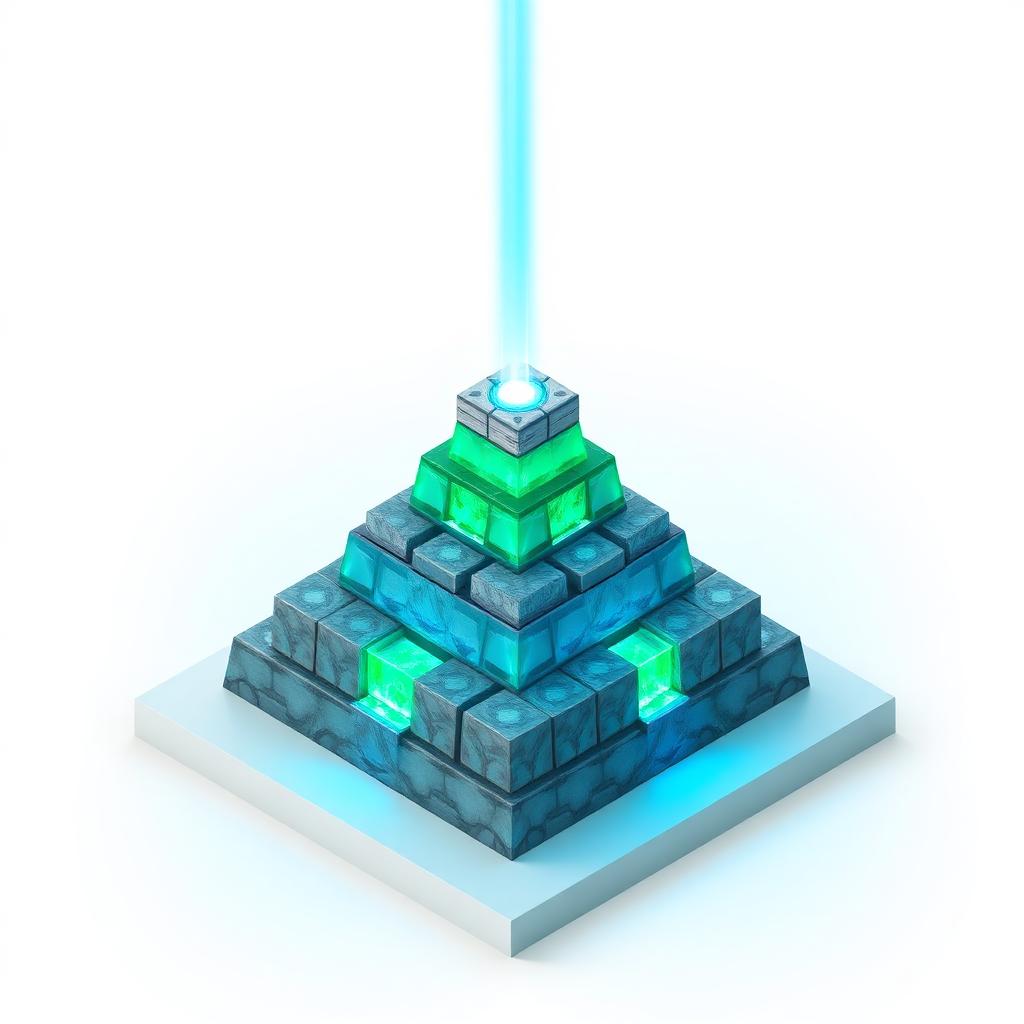
- Beacon bases when you want the beacon to survive a raid — combine with the beacon calculator to plan the pyramid.
- Wither cages and End Crystal duel platforms in PvP servers.
- Portal hubs. A single Nether hub built from obsidian survives creeper-griefing and looks intentional at the same time.
The FAQ below has the fastest answers to the most common obsidian questions — AI overviews and Google's rich results pull answers directly from this block, so we've written each one to stand on its own.